Repainting Builder Beige Walls in 1990s Temecula Homes
Run a flashlight flat along the wall in a dark room before anything gets opened, because the beige in a 1990s Temecula house hides more than it shows, and temecula painting contractor join remax prestige sets the order of repair work around what that light reveals. Painting over builder paint is mostly a question of the surface underneath, and this stretch of Riverside County has a lot of it from the subdivision years.
What the original coat actually is
Homes built during the rapid growth of the 1990s, including the master-planned streets around Redhawk, were usually sprayed in one pass with cheap flat latex. The film is thin, chalky, and porous. A wet rag pulled across it often comes away tinted, which tells the painter the old coat has little binder left and will drink the first coat of anything new.
Patching before colour

Thirty years of settling leaves nail pops, hairline cracks above door frames, and the dents left by furniture. Each one gets scraped, filled with spackle, and given a second thin skim once the first shrinks. Patching that looks fine in the morning can flash through the topcoat by afternoon, so every repaired spot is spot primed before the wall gets its first full coat.
Sanding and the sheen problem
Builder walls are flat, but trim and doors from that era are often semi gloss over oil based enamel. Latex will not grab that surface without a scuff sand, and skipping it is how paint peels off a door edge within a year. Walls need only a light pole sanding to knock down roller stipple and spray splatter.
Going darker or lighter than beige
Moving from tan to a deep green or a charcoal takes a tinted primer in a shade near the final colour. Without it, two coats may still show the old beige at the corners where the roller lifts. Going lighter is easier but chalky walls still need primer so the new acrylic film bonds instead of sitting on dust.
Tall walls and bright light
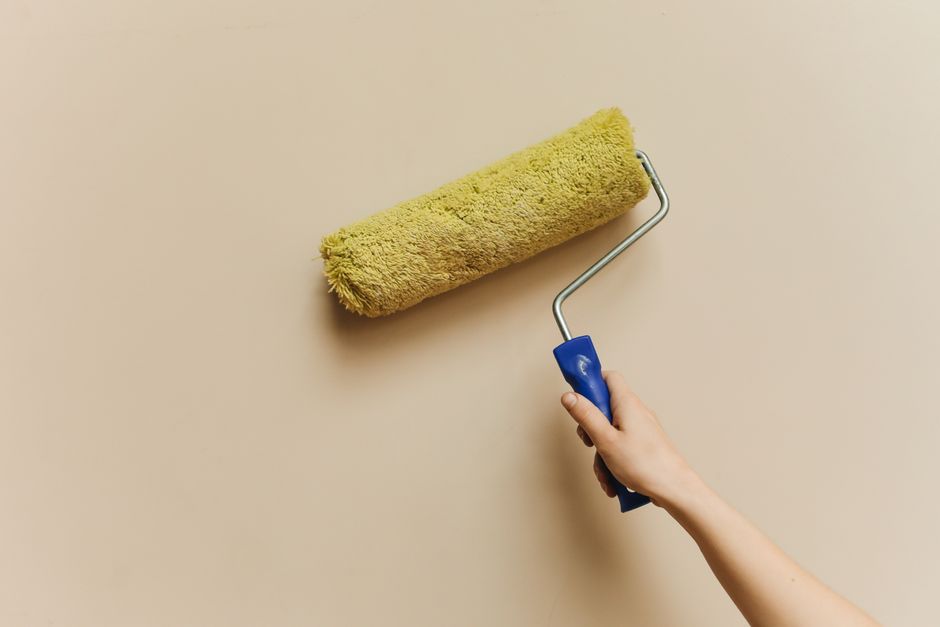
Entry halls in these houses often run past eighteen feet, and cutting in along a ceiling that high needs a ladder or a scaffold rather than a long pole. Strong Temecula sun through west windows also shows every lap mark and every missed spot, so a wall is rolled in full-height sections with a wet edge kept the whole way down. A roller with a three-eighths inch nap leaves the right texture on smooth drywall, while a heavier nap suits the orange peel that was sprayed onto many ceilings.
Finishing up
Caulk goes into the gaps at baseboards and crown before the final coat, not after, so the line between trim and wall comes out crisp. Once the second coat has dried overnight, the tape comes off at a shallow angle and any bleed gets touched up with a small brush.